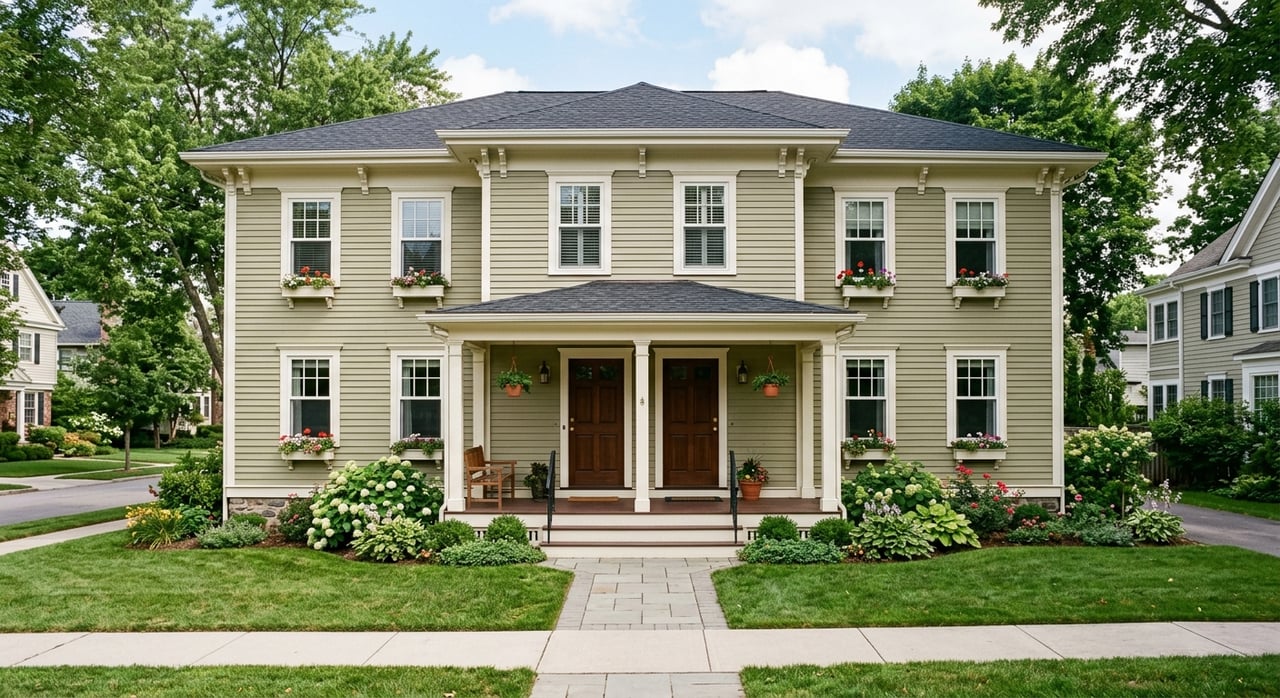
Getting Started With Duplex And Triplex Investing In Milwaukee
June 4, 2026
June 4, 2026
Wondering if a Milwaukee duplex or triplex could be your first step into real estate investing? You are not alone. For many buyers, small multifamily properties offer a practical way to start building long-term wealth while also creating housing flexibility. If you want to understand how duplex and triplex investing works in Milwaukee, what to watch for, and how to evaluate your options with more confidence, this guide will walk you through the basics. Let’s dive in.
Milwaukee offers a strong starting point for buyers exploring duplex and triplex investing because the city has a meaningful renter market and a large supply of smaller residential buildings. City data shows an owner-occupied housing rate of 41.8%, a median gross rent of $1,059, and a median owner-occupied home value of $184,000. HUD also reported that 41.1% of the Milwaukee-Waukesha-West Allis market rented in 2023, with average apartment rent at $1,422 in the second quarter of 2025 and a 5.5% vacancy rate.
That said, market averages do not guarantee performance for any one property. A duplex on one block can operate very differently from a triplex a few streets away. Your results will depend on the building, the financing, the rents, the condition, and your plan for managing costs.
In Milwaukee, duplexes and triplexes are often best viewed as small residential assets, not large apartment buildings. The city assessor groups 1- to 3-family properties together, while apartments are categorized separately as 4-family and over. That distinction matters when you are comparing properties, reading listings, and thinking about financing.
For many first-time investors, a duplex is the simpler place to start. A triplex can create more rental income potential, but it may also come with more underwriting complexity, more maintenance, and more moving parts during your purchase.
A duplex can be a more manageable entry point if you want to live in one unit and rent the other. In many cases, owner-occupied financing on a 2-unit property offers more favorable leverage than buying a similar building strictly as an investment. It also tends to be easier for buyers who are learning how to balance personal housing costs with rental income.
A triplex may offer more income support, but it can also trigger extra lender review. FHA guidance includes a self-sufficiency test for 3- to 4-unit properties, which means the projected net rental income must support the mortgage payment after built-in vacancy and maintenance assumptions are applied. In plain terms, some triplex purchases need to show that the building can carry itself.
One of the most common ways to begin is with an owner-occupied purchase. You live in one unit and rent the other unit, or units, to help offset your monthly housing cost. This is often called house hacking, and it can be one of the most practical ways to get started with small multifamily investing.
FHA loans can be used on 1- to 4-unit properties, and HUD says the minimum required investment can be as low as 3.5% in many cases. Freddie Mac also offers mortgages for 2- to 4-unit owner-occupied primary residences.
The financing difference between owner-occupied and non-owner-occupied property is important. Freddie Mac shows that some owner-occupied 2-unit and 3- to 4-unit primary residences can be financed up to 95% loan-to-value, while 2- to 4-unit investment properties are capped at 75% loan-to-value. That usually means living in one unit opens the door to a lower upfront cash requirement than buying the same building purely as a rental.
Often, yes. For owner-occupied 2- to 4-unit primary residences, rental income from the units you will not occupy may be counted if it is stable, verifiable, and reasonably expected to continue for at least three years. Lenders may review leases, comparable rent data, the purchase contract, and other documentation.
This is one reason small multifamily can work well for first-time investor-buyers. Even so, you should never assume every lender will review rental income the same way. Before you make an offer, ask exactly how that lender will calculate it for the property you want.
Zoning is one of the first local checks to make before you get too far into a property. Milwaukee’s zoning code includes single-family, two-family, multi-family, and residential/office districts, and the Department of Neighborhood Services Development Center determines official zoning compliance.
Here is the practical takeaway for duplex and triplex buyers:
If you are considering a duplex or triplex, confirm that the building type is permitted in that zoning district. This is especially important if the property has an unusual layout, a converted basement space, or any unit count that seems unclear in the listing.
A lot of first-time buyers focus too heavily on the mortgage payment. A better starting point is gross rent minus all ownership costs, not just rent minus principal and interest. If you want a realistic view of performance, you need to account for the full monthly picture.
That includes costs such as:
Closing costs matter too. Consumer guidance says they typically run about 2% to 5% of the purchase price, excluding the down payment. That is a meaningful line item when you are planning your cash to close.
Milwaukee revalues property annually to keep pace with the market. That makes property taxes an especially important moving variable when you are analyzing a duplex or triplex. A building that looks affordable based on current taxes may feel different if the assessment changes after purchase.
For older multifamily properties, this deserves extra attention before you write an offer. When I work with buyers, one of the most helpful early conversations is not just “What is the payment today?” but “What could the true carrying cost look like after reassessment, insurance, and repairs?”
Milwaukee duplexes and triplexes can be great opportunities, but small multifamily properties come with local and property-specific checks that are easy to overlook.
If the property will be non-owner-occupied, Milwaukee requires ownership contact information to be registered with the Department of Neighborhood Services. The city ties this registration to the transfer of title. If your long-term plan is to move out later and hold the building as a rental, it helps to know this requirement upfront.
For pre-1978 properties, federal rules require disclosure of known lead-based paint information before most sales or leases. In Milwaukee, where many duplexes and triplexes are older, lead-safe renovation and disclosure should be treated as standard due diligence. This is not a small detail. It can affect your renovation planning, leasing process, and ownership responsibilities.
If you are buying a City-owned duplex or multifamily home, separate program rules may apply. Milwaukee requires landlord training before closing for certain City-owned owner-occupant purchases, and those buyers may also be subject to a 3-year occupancy covenant. These are not universal private-market rules, but they are important if you are looking at city inventory.
Some Milwaukee assistance programs are geared toward owner-occupants and may be limited to 1- to 2-unit properties. If you are planning to buy a triplex, verify eligibility early instead of assuming a grant or forgivable-loan option will apply.
Before you write on a duplex or triplex in Milwaukee, ask clear questions and get clear documentation. That step can save you time, money, and stress later.
Ask about:
You should also talk with an accountant about how rental income, repairs, improvements, depreciation, and shared expenses may be reported for an owner-occupied multifamily property. That conversation can help you set up your records correctly from day one.
If you are serious about buying a duplex or triplex in Milwaukee, keep your first pass simple.
The goal is not to find a “perfect” first property. The goal is to find a property that fits your budget, your tolerance for complexity, and your long-term plan.
If you want help sorting through Milwaukee duplex and triplex options, running through local considerations, or figuring out what kind of small multifamily property fits your goals, Cierra Burmeister can help you make a more informed next move.

I believe real estate is more than transactions — it’s about creating experiences that last. Leveraging local knowledge and market insight, I help buyers find homes that truly fit their lifestyle and sellers present their properties with clarity and care. Every client receives personalized guidance, clear communication, and a commitment to excellence. Outside of work, I enjoy exploring Milwaukee’s outdoors, rock climbing, and family adventures.
Cierra Burmeister
1610 N Water St Milwaukee WI 53202