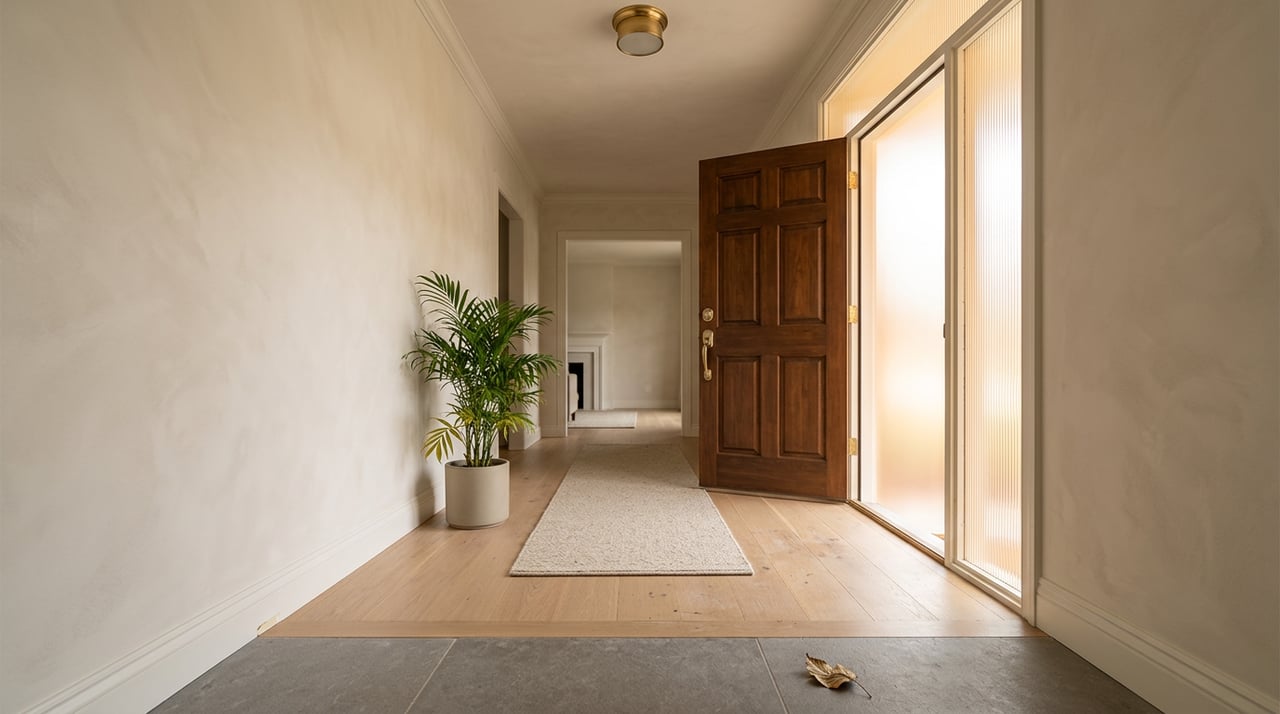
Doors Open Milwaukee 2026: What to Plan Around This Year
August 13, 2026
August 13, 2026
"I call it your key to the city," says Grace Fuhr, the events director for Historic Milwaukee, describing the free weekend when more than 150 buildings around town let strangers wander in.
That's the pitch every year. Doors Open Milwaukee happens every fall, the list of participating sites gets published, and people pick a handful of landmarks they've always meant to see. This year, that approach misses the point. The interesting part of Doors Open 2026 isn't the list at all. It's what's different about this specific weekend that won't be true again next September.
Doors Open Milwaukee returns September 26 and 27, 2026, organized as always by Historic Milwaukee, Inc. Expect more than 150 free locations, plus roughly 40 ticketed tours priced from free to $10 apiece. The full site roster won't post until the first week of September, so if you're the type who waits for the master list before making plans, you're giving yourself under three weeks to figure out logistics for a city-wide event.
That's the wrong instinct anyway. The list repeats more than it changes. Bradley Symphony Center, America's Black Holocaust Museum, and Frank Lloyd Wright's Burnham Block have shown up as "returning favorites" in Historic Milwaukee's own press materials for years running. If you're planning around famous names, you're planning around the parts of Doors Open that are the same every September.
Two things separate 2026 from a typical Doors Open, and neither shows up if you just skim a building list.
First, UW-Milwaukee is presenting sponsor of Doors Open Milwaukee this year. The university is treating Saturday, September 26, from 10 a.m. to 5 p.m. as a signature moment tied to Chancellor Thomas Gibson's inauguration week, running it alongside Family Weekend. That means campus sites like Kenilworth Square East, the former automotive plant UWM now runs as a creative factory for more than 100 working artists, will likely see heavier programming and foot traffic than in a typical year, since the university has real institutional weight behind this one.
Second, and more interesting if you care about architecture rather than campus events: the Burnham Block is not the polished show house it usually is. Frank Lloyd Wright's Burnham Block Inc. began an $800,000 restoration on the Model C3 home at 1835 S. Layton Blvd. late in 2025, with work expected to continue through 2026. That house is one of just three confirmed examples of its type, part of a rare cluster of six homes Wright designed under his American System-Built Homes program before World War I ended the project. Most years, if the Burnham Block participates in Doors Open, you see the fully restored Model B1 elsewhere on the block, already finished and interpreted. This year, assuming the block appears on the list again as it usually does, you have a shot at seeing a Wright restoration still in progress, exterior stucco and roof work included, rather than only the tidy finished version everyone else has already toured.
Here's the difference laid out plainly:
| What repeats every year | What's specific to 2026 |
|---|---|
| Bradley Symphony Center, America's Black Holocaust Museum as returning favorites | UWM as presenting sponsor this year, tied to a chancellor's inauguration week |
| The finished Model B1 at Burnham Block | The Model C3 mid-restoration, work ongoing through the year |
| A list of famous names published early September | A campus push timed to Family Weekend, likely to shift crowd patterns |
Fuhr's own advice backs this up. "The best itineraries are carefully planned in advance and take the geography of the city into consideration," she told Milwaukee Magazine, recommending the Doors Open website's favoriting tool to map a route before the weekend starts rather than improvising site to site.
That's the actual skill here. Doors Open sites cluster loosely by neighborhood, and the smart move is picking a cluster and working it, rather than crisscrossing town chasing whichever building has the best photos online.
A few examples worth knowing by name if you're building a route:
Milwaukee City Hall, at 200 E. Wells St., runs a ticketed climb up a spiral staircase to the 22,500-pound Solomon Juneau bell in the historic tower. It's a perennial sellout, so if it's offered again this year, grab tickets the moment they post rather than treating it as a walk-up option.
Alice's Garen Urban Farm, at 2136 N. 21st St., is a community garden with roots tracing back to the Sauk tribe and the Underground Railroad, its labyrinth trails mixing edible and floral plantings. It's the kind of stop that rewards slower wandering rather than a quick photo and exit.
The Grain Exchange Room inside the Mackie Building at 225 E. Michigan St. was the actual trading pit where Milwaukee set the price of wheat in the late 1800s and early 1900s. It's an event space now, murals and all, and it sits close enough to City Hall to pair on the same downtown loop.
The Historic Milwaukee app also carries neighborhood-specific self-guided tours, including one covering Lindsay Heights, that extend past whatever the printed site list covers. Downloading it before the weekend gives you a fallback plan if a ticketed tour sells out or a line runs long.
If you're building a two-day plan around clusters rather than fame, something like this respects both the calendar and the map:
That order isn't random. It moves roughly west to south across two days instead of doubling back across the city, and it puts the ticketed, sellout-prone stop first thing Saturday when you actually have a shot at tickets.
Milwaukee Septembers run mild but not predictable. Typical daytime highs sit in the 66 to 76 degree range, with the city averaging around nine rainy days across the month and roughly a one-in-three chance of precipitation on any given day. That's not a reason to panic about weather. It's a reason to lock in anything ticketed or weather-dependent early in the weekend, and leave the flexible, mostly-indoor stops like the Grain Exchange Room or Kenilworth's studios for whichever half of the weekend turns out damp.
The building list that drops in early September will look a lot like last year's, because it mostly is. What makes 2026 worth planning around isn't which names show up again. It's that UWM's turn as sponsor this year is reshaping the campus experience, and the Burnham Block's restoration means one of the city's most photographed small houses is temporarily an active job site rather than a museum piece. Neither of those will be true the next time Doors Open rolls around. That's the case for building your route around this year's specific conditions instead of the version of the list you've already seen work fine in past Septembers.
If you're new to a neighborhood this event touches, or thinking about what it's actually like to live somewhere close enough to walk into Doors Open weekend rather than drive in for it, Cierra Burmeister knows these blocks well enough to talk through it honestly. Reach out anytime you want a local's read on a Milwaukee neighborhood, no obligation attached.
I believe real estate is more than transactions — it’s about creating experiences that last. Leveraging local knowledge and market insight, I help buyers find homes that truly fit their lifestyle and sellers present their properties with clarity and care. Every client receives personalized guidance, clear communication, and a commitment to excellence. Outside of work, I enjoy exploring Milwaukee’s outdoors, rock climbing, and family adventures.
Cierra Burmeister
1610 N Water St Milwaukee WI 53202